The problem with one score per bridge
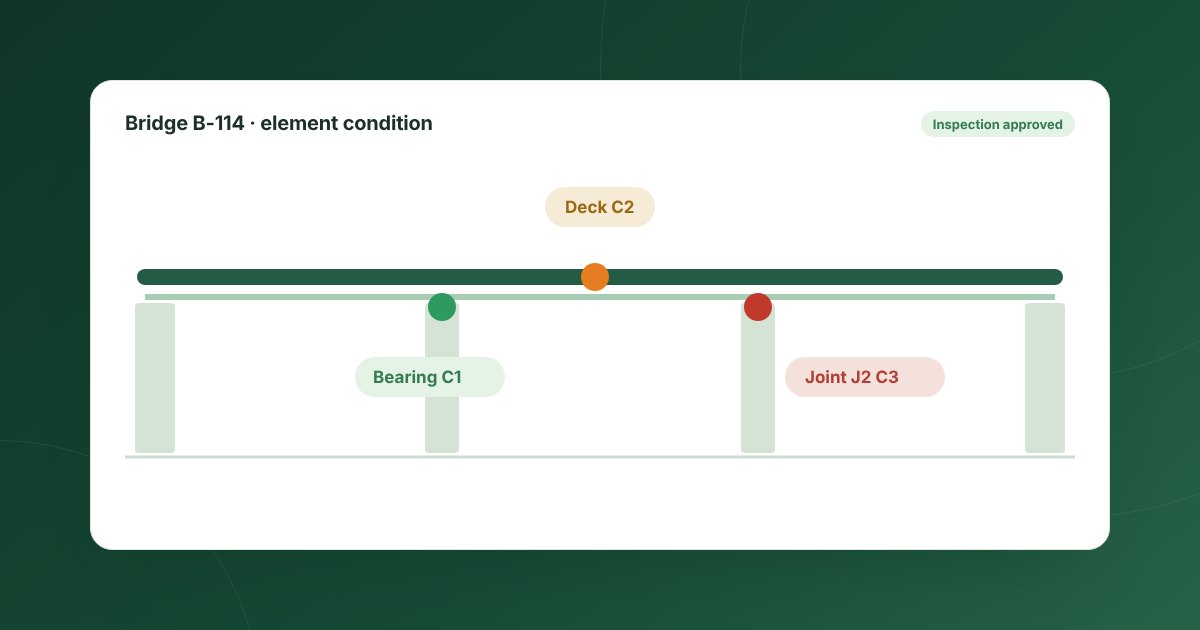
Bridges deteriorate element by element. Joints leak, bearings seize and decks crack at different rates. When each inspection produces one overall rating and a written report, the information that would guide repairs is locked inside a document.
- It is hard to compare bridges or track changes over time.
- Repairs are planned from memory and reports, not from data.
- Capital requests are difficult to defend.
What element-level inspection means
Each bridge is broken down into its elements, such as deck, girders, bearings, joints, piers and abutments. For each element the inspector records how much of it is in each condition state, for example from good to severe, along with defects, measurements and photos.
Standards such as the AASHTO Specifications for the National Bridge Inventory (SNBI) in the United States describe this approach. Many countries have their own manuals built on the same idea.
What you gain
- Repairs target the element that needs work, not the whole bridge.
- Deterioration trends show up early, while repairs are still small.
- Capital plans rank bridges on real condition and risk.
- Restrictions and decisions trace back to evidence.
How to make the change
- Load the inventory
Import your bridges and break them into elements, starting with the most important structures.
- Set up the forms
Build inspection forms that match your manual, with condition states and defect types.
- Run a pilot
Inspect a small group of bridges on tablets and compare the results with the old reports.
- Add approvals
Have engineers review and sign inspections before results update the bridge.
- Roll out
Extend to the full programme, region by region.
Linking inspection to action
Data is only useful when it leads to action. Severe ratings should raise work orders, change the status of the bridge where needed, and feed the renewal programme. Sensors on critical elements, such as tilt meters on bearings, add a live view between inspections.
How Mintema helps
Mintema includes ready bridge and tunnel types mapped to SNBI and SNTI, element inspections with condition states, multi-step approvals, automatic status updates, 3D models linked to elements and a capital plan ranked by risk.