Three strategies in plain language
| Strategy | How it works | Best for |
|---|---|---|
| Run to failure | Fix it when it breaks. | Cheap, non-critical assets with spares on the shelf. |
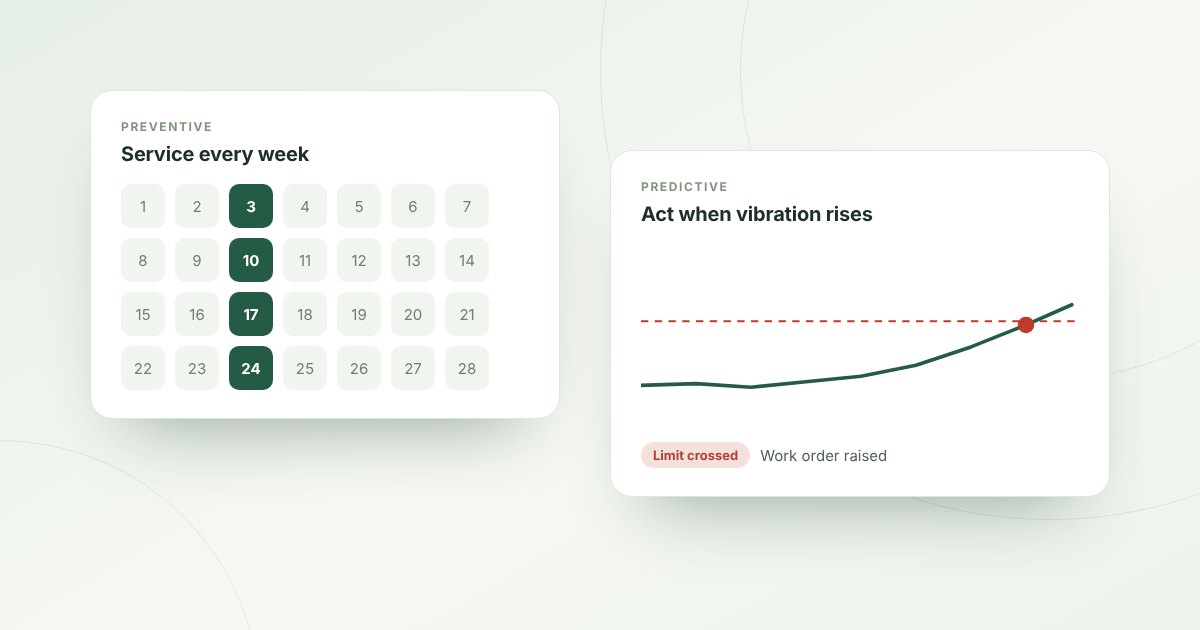
| Preventive | Service at fixed intervals of time or usage. | Assets that wear in a predictable way. |
| Predictive (condition-based) | Watch the condition and act when it starts to change. | Critical, expensive assets whose failures give a warning. |
Most organisations use all three. The mistake is applying one of them everywhere: servicing everything on a calendar wastes money, and putting sensors on everything wastes even more.
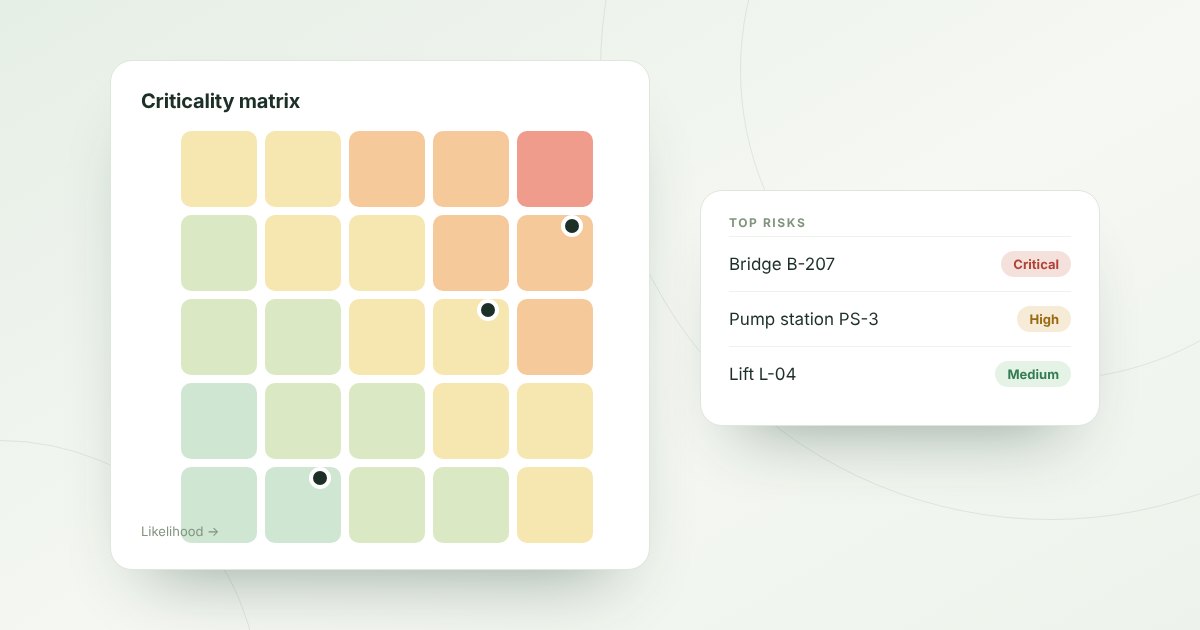
Start with criticality
Ask two questions for every asset type: what happens when it fails, and how likely is it to fail? A failed pump at a main pumping station can cut water to thousands of homes. A failed light in a corridor is an inconvenience. The first deserves attention; the second does not.
Then look at how it fails
- If failures come with warning signs such as vibration, heat or noise, predictive maintenance works well.
- If wear depends on time or use, such as filters, belts or oil, preventive maintenance is the right tool.
- If failure is sudden and random and the consequence is small, run to failure is often the cheapest choice.
A simple decision guide
- High consequence, warning signs
Predictive. Put sensors or regular readings on it and set limits.
- High consequence, no warning signs
Preventive, with redundancy or spares ready.
- Low consequence, predictable wear
Preventive at a sensible interval.
- Low consequence, random failure
Run to failure, with spares on the shelf.
Getting started with predictive maintenance
You do not need a large IoT project to begin. Start with five to ten critical assets, add one or two readings that really show their health, and set simple limits. When a reading crosses a limit, a work order should be raised automatically, so the warning turns into action.
After a few months, compare the failures you prevented with the cost of the sensors and the work. That comparison is your business case for the next step.
Measure and adjust
Review your strategy at least once a year. If an asset keeps failing between services, shorten the interval or move it to condition-based maintenance. If it never needs anything at its service, stretch the interval.
How Mintema helps
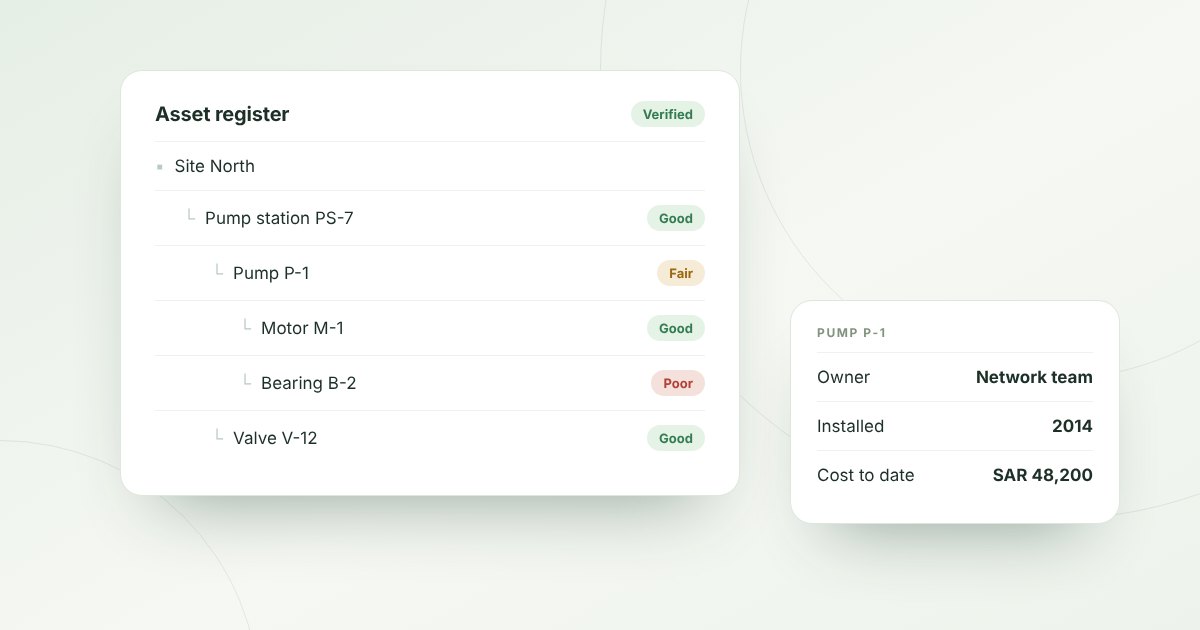
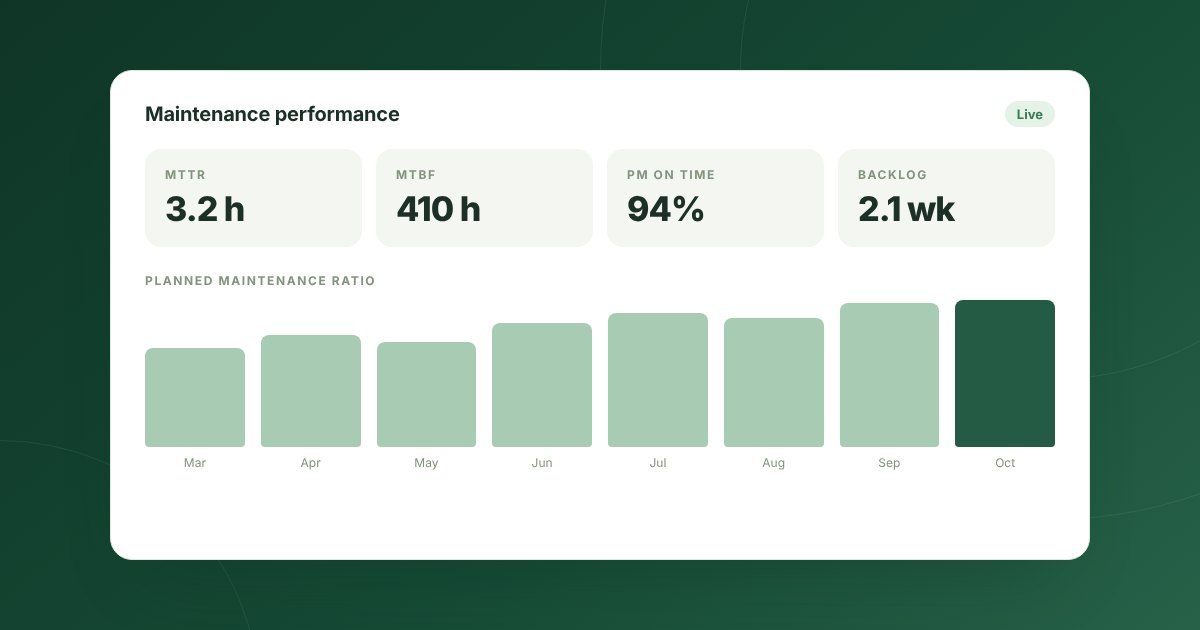
In Mintema, preventive plans can run by date, usage or condition. Sensors are installed on the assets they measure, and rules in the Automation Studio turn readings into alerts and work orders. Dashboards show breakdowns, planned work and cost per asset, so you can see which strategy is paying off.